
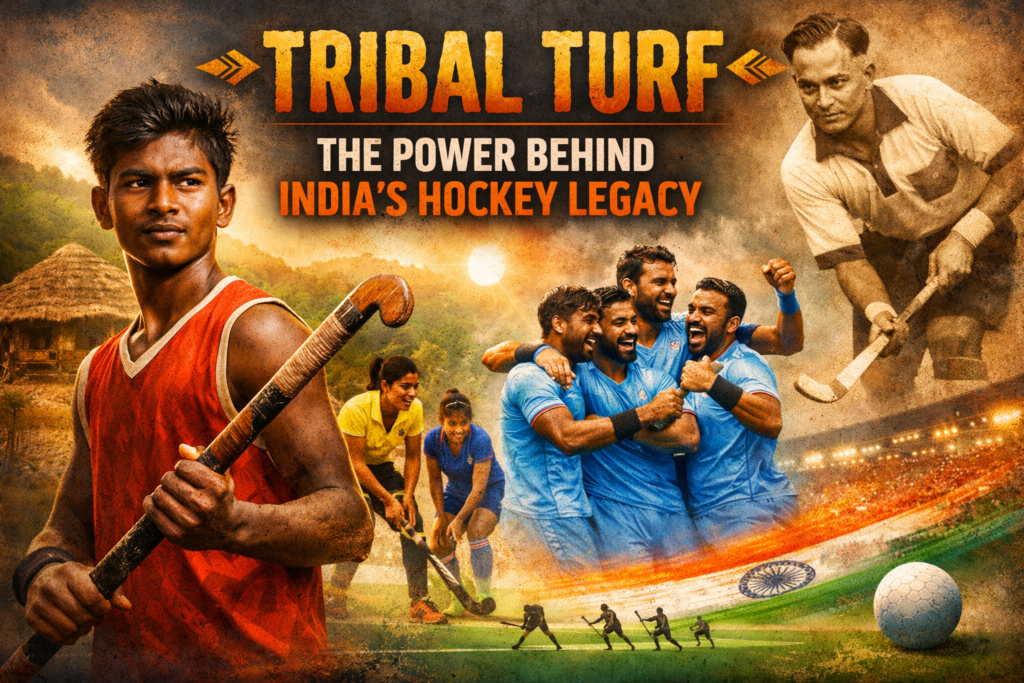
In the heart of India’s tribal regions, where mud grounds replace manicured turfs and wooden sticks stand in for high-tech gear, hockey isn’t just a sport—it’s a way of life, a cultural heartbeat, and a path to glory. The documentary Tribal Turf – The Power Behind India Hockey, produced by Doordarshan Sports, shines a spotlight on the profound contributions of tribal communities to Indian hockey. From remote villages in Jharkhand and Odisha to Olympic podiums, this film weaves a tale of resilience, community spirit, and unyielding passion that has propelled India to international acclaim.
A Historical Foundation Built on Tribal Grit
The roots of tribal involvement in Indian hockey trace back to the early 20th century. One pivotal figure is Jaipal Singh Munda, who captained India’s hockey team to gold at the 1936 Berlin Olympics. As the documentary highlights, this marked the dawn of a legacy where tribal athletes brought their innate agility, stamina, and teamwork to the forefront of the sport.
Post-independence, legends like Michael Kindo continued this tradition, embodying the discipline and skill honed in tribal heartlands. These areas—spanning Jharkhand, Odisha, Chhattisgarh, West Bengal, and parts of Madhya Pradesh—are home to tribes such as Ho, Gaya, Munda, Oraon, and Santhal. Here, hockey transcends recreation; it’s a “religion” and a custom that unites communities, fostering talent from grassroots levels to global stages.
Icons of the Game: From Mud Fields to Medal Stands
The film features inspiring stories of tribal hockey stars who rose from humble beginnings. Dilip Tirkey, a three-time Olympian renowned for his tackling prowess and leadership, exemplifies the tribal ethos of perseverance. Emerging from Odisha’s Sundargarh district, Tirkey’s journey reflects the raw talent nurtured in village tournaments.
Bharat – In action with a true legend 🇮🇳🏑 Throwback to the HIL Hockey League, sharing the field with Shri Dilip Tirkey — former captain of the Indian national team and now
Similarly, modern trailblazers like Salima Tete, captain of the Indian women’s hockey team and Arjuna Award recipient, hail from a small village in Jharkhand’s Simdega district. Tete credits her success to coaches like Pratima Barwa and the unwavering support of her community. Other notable figures include Nikki Pradhan, Virendra Lakra (a Tokyo Olympics bronze medalist), Deep Grace Ekka, Lazarus Barla, Ignas Tirkey, and Prabodh Tirkey. These athletes, often starting on makeshift grounds with basic equipment, have contributed to India’s successes in Olympics, World Cups, and Asian Games.
Salima Tete named India captain for Women’s Hockey Asian Champions Trophy
The documentary emphasizes how tribal players’ natural attributes—speed, endurance, and collaborative spirit—have been key to India’s hockey renaissance, inspiring generations despite challenges like limited resources.
The Heart of Hockey: Grassroots and Community Spirit
In tribal villages, hockey is played with “heart and soul” on natural fields, evolving from traditional games to competitive prowess. The film captures the vibrancy of local tournaments, where families rally around young talents, turning sports into a tool for unity and cultural preservation.
Events like the Birsa Munda Unity Cup, held annually to commemorate freedom fighter Birsa Munda’s birth anniversary, bring together players from various states. Categories for all ages foster pride and aspiration, with even urban tribal diasporas in cities like Delhi participating to keep the legacy alive.
Efforts On To Revive Hockey-Like Tribal Game Called Phodi – The Indian Tribal
Government initiatives, such as those led by MP Raja Devendra Pratap Singh in Chhattisgarh, provide essential support—kits, shoes, and stadiums across 33 districts—to nurture emerging stars and elevate the sport.
A Monument to Tribal Pride: Birsa Munda International Hockey Stadium
At the center of this narrative stands the Birsa Munda International Hockey Stadium in Rourkela, Odisha—the world’s largest hockey venue. Named after the iconic tribal leader, this state-of-the-art facility symbolizes progress and motivation. Built to host major events and connect fans with players, it aims to propel India back to Olympic gold, last achieved in 1980, beyond recent bronze medals.
The stadium not only promotes infrastructure development but also embodies the tribal communities’ enduring impact on hockey, serving as a beacon for future generations.
Looking Ahead: A Legacy of Perseverance and Promise
Tribal Turf paints a vivid picture of how tribal communities have been the backbone of Indian hockey, blending tradition with triumph. Through stories of dedication and communal bonds, the documentary calls for continued support to harness this talent pool, ensuring tribal athletes continue to bring glory to the nation.
This is more than a sport’s story—it’s a celebration of India’s diverse heritage, where perseverance on the field mirrors the resilience of its people. For anyone passionate about sports or cultural narratives, this documentary is a must-watch, reminding us that true power often lies in the unlikeliest of places.