
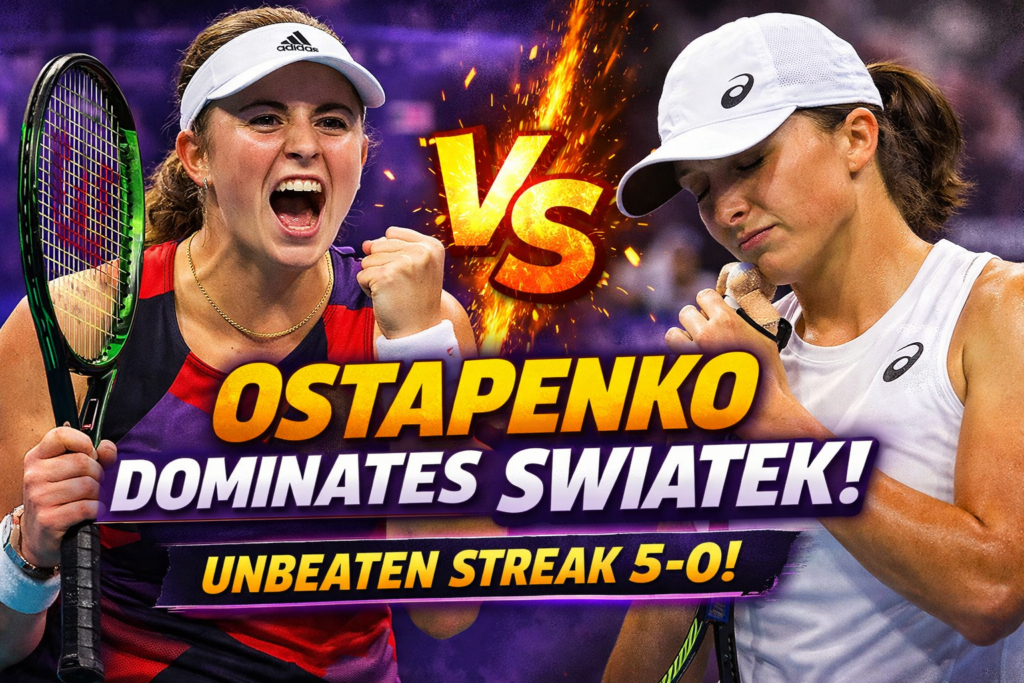
In a stunning display of aggressive tennis, Jelena Ostapenko dismantled world No. 1 Iga Swiatek 6-3, 6-1 in the semifinals of the 2025 Qatar TotalEnergies Open in Doha. This victory not only propelled Ostapenko into her first Doha singles final in nine years but also solidified her remarkable 5-0 head-to-head record against Swiatek, a feat unmatched by any other player on the WTA Tour.
The match, played under breezy desert conditions at the Khalifa International Tennis and Squash Complex, showcased Ostapenko’s fearless style as she attacked from the baseline and dictated play with precision and power. Swiatek, the defending champion and a dominant force in Doha with a 17-1 record prior to this encounter, appeared subdued and unable to impose her tactical prowess.
First Set: Ostapenko Sets the Tone Early
Ostapenko wasted no time asserting dominance, breaking Swiatek’s serve in the opening games to race to a 3-1 lead. Her strategy was clear: attack first and second serves relentlessly, avoiding prolonged rallies that favor Swiatek’s grinding baseline game. By the third game, Ostapenko had already notched six winners, turning the match into a shot-making clinic.
Swiatek fought back with clever redirection, targeting Ostapenko’s forehand to throw her off balance, but the Latvian held firm. A key moment came when Ostapenko saved break points with smart serving—mixing body serves and wide aces—to maintain her advantage. She reached three set points and converted the third with a thunderous winner, sealing the set 6-3 after 29 points to Swiatek’s 21. The wind played a role, with gusts aiding Ostapenko’s flat shots near the lines, while Swiatek struggled with length and committed unforced errors.
Second Set: A Rout as Ostapenko Cruises
The second set was even more one-sided. Ostapenko broke Swiatek multiple times, including a triple break point opportunity to surge to 5-1. Swiatek managed one break back, flashing her trademark backhand down the line, but it was too little, too late. Double faults and a rare racket smash from the Pole highlighted her frustration as Ostapenko’s bold serving and disguised angles kept her guessing.
Ostapenko’s efficiency shone through: higher first and second serve win percentages, fewer unforced errors, and a barrage of winners that overwhelmed Swiatek’s defenses. The match ended with Ostapenko toying at the net on match point, followed by a triumphant roar that echoed through the arena.
Player Performances and Strategies
Ostapenko’s success stemmed from her no-fear approach, honed from past triumphs like her 2017 French Open comeback against Simona Halep at age 20. She adapted seamlessly to the wind—hitting flat against it and controlling with spin when aided—while her psychological edge over Swiatek was evident. Post-match, Ostapenko credited Doha’s “special energy” and her focus on self-improvement for the win.
Swiatek, despite her team’s deep discussions (including statistician Wim Fissette and sports psychologist Daria Abramovic), couldn’t find solutions. Her attempts to vary serve placements and play behind Ostapenko’s forehand fell short against the Latvian’s redirection and commitment to angles.
Looking Ahead
This upset ends Swiatek’s bid to become the first player since Petra Kvitova (2012-2015) to reach four straight finals at a WTA event. Ostapenko now advances to face Amanda Anisimova in the final, aiming for her first title in Doha since 2016. For Swiatek, it’s a rare setback in a tournament where she’s historically excelled, but her resilience suggests a strong rebound in upcoming events.
This match reaffirms Ostapenko’s status as Swiatek’s kryptonite, blending power, precision, and mental fortitude in a performance that captivated fans worldwide.