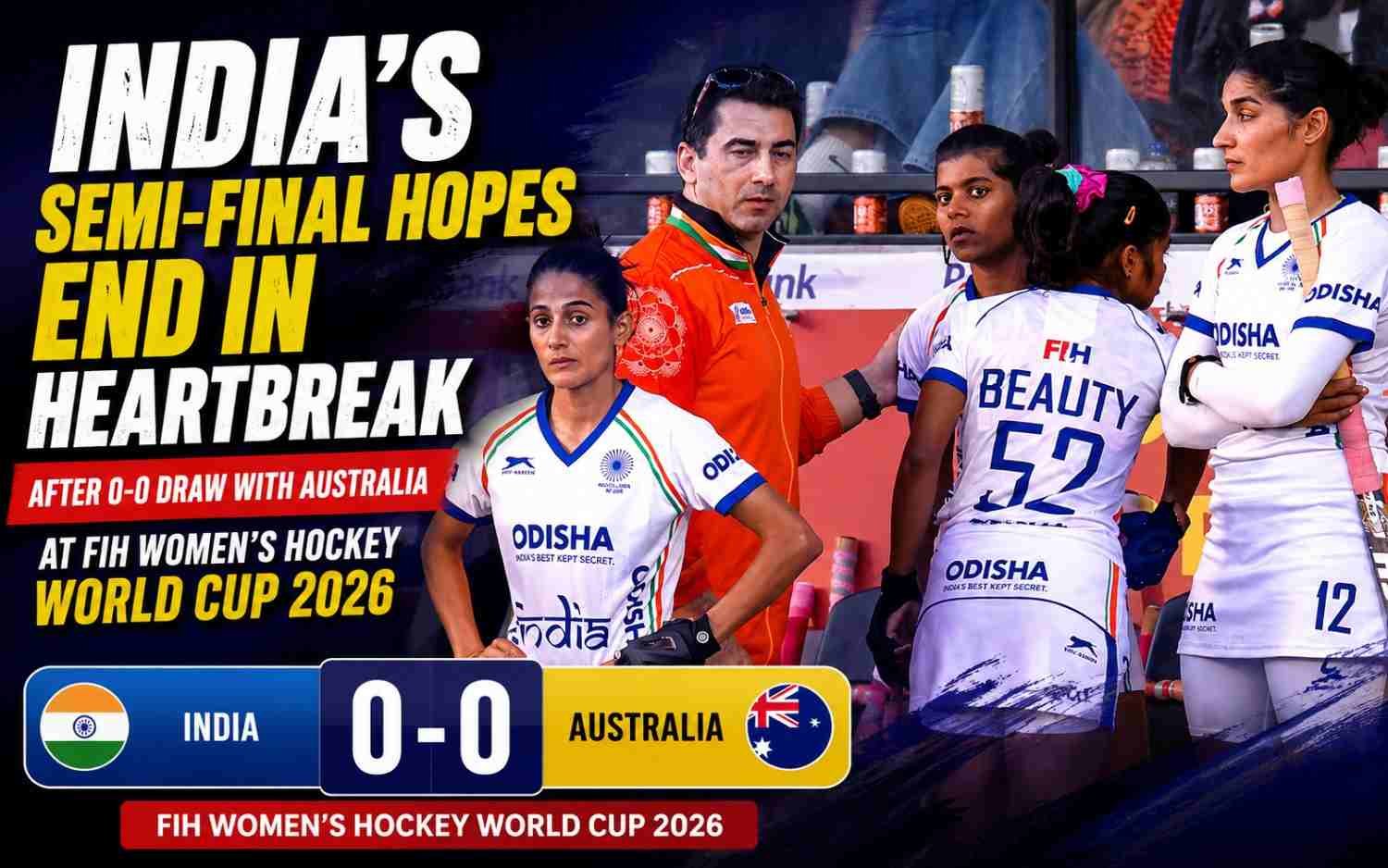
In a tense and tightly contested Pool E encounter at the Wagener Stadium in Amstelveen on August 23, 2026, the Indian women’s hockey team produced another gritty defensive performance but ultimately fell short of the victory they needed. A goalless draw against Australia ended India’s semi-final aspirations at the FIH Women’s Hockey World Cup, with the Hockeyroos advancing on the goals-scored criterion. The official FIH highlights of Game 36 capture the intensity, the near-misses, and the raw emotion that defined a match of fine margins.
India entered the contest knowing only a win would keep their campaign alive after the Netherlands had earlier defeated China 4-1. Australia, meanwhile, required just a point to progress. Both sides delivered disciplined, high-intensity hockey, but neither could find the decisive breakthrough.
India’s Semi-Final Hopes End in Heartbreak After 0-0 Draw with Australia at FIH Women’s Hockey World Cup 2026
A Battle of Defences and Missed Opportunities
The match began with both teams showing caution. Australia enjoyed more possession and circle entries, yet India’s organised defence, led by captain Salima Tete and goalkeeper Savita Punia, stood firm. Early in the contest, Australia thought they had taken the lead when a close-range effort appeared to cross the line, but India successfully referred the decision. The video umpire ruled the play dangerous, preserving the scoreless status.
India’s best opportunity of the first half arrived from a penalty corner. A well-worked variation found Nikki Pradhan in space, but she failed to connect cleanly and the chance was lost. Australia continued to press, earning multiple penalty corners, yet the Indian backline and Savita repeatedly denied them.
After the interval the pattern continued. Australia controlled more of the ball and created the greater number of scoring opportunities, but India’s defensive structure and timely interventions kept the scoreboard blank. Late in the match India pushed forward more aggressively, withdrawing their goalkeeper in search of a winner. Promising moments involving Salima Tete, Navneet Kaur and Lalremsiami created hope, yet the final clinical touch eluded them. Australia held their shape and ran down the clock successfully.
Final Pool E Standings
| Position | Team | Played | Points | Goal Difference | Goals Scored | Status |
|---|---|---|---|---|---|---|
| 1 | Netherlands | 3 | 9 | +7 | 10 | Qualified for semis |
| 2 | Australia | 3 | 2 | -2 | 3 | Qualified for semis |
| 3 | India | 3 | 2 | -2 | 2 | 5th-place playoff |
| 4 | China | 3 | 2 | -3 | 4 | Classification |
The identical points and goal difference between India and Australia meant the tie-breaker of goals scored decided the outcome. Australia’s three goals across the second round proved decisive against India’s two.
Reflections and What Comes Next
India captain Salima Tete was honest in her assessment after the match. “We don’t feel good. We came so close, but we let this game go out of our hands. We need to learn from this match. We had some chances as well, and we didn’t finish,” she said. She also emphasised that the team would continue fighting for the best possible finish in the classification matches.
The result brings an end to India’s semi-final hopes but does not diminish the progress shown throughout the tournament. The team remained competitive against top sides, produced memorable defensive displays against England and Australia, and recorded a dominant win over South Africa. Their ability to stay organised under pressure against higher-ranked opponents has been a consistent feature of the campaign.
India will now turn their attention to the fifth-place classification match. A strong performance there would mark one of their best finishes at a Women’s World Cup in recent history and provide valuable experience for the young squad under coach Sjoerd Marijne.
Australia advance to the semi-finals alongside the dominant Netherlands and will face a tough knockout path. For India, the focus shifts to maximising their remaining opportunity and extracting lessons from a tournament in which they competed with heart and structure but ultimately lacked the finishing edge when it mattered most.
The FIH highlights package of the Australia-India clash illustrates both the resilience of the Indian defence and the fine margins that decide major tournaments. A single goal would have rewritten the narrative. Instead, a hard-fought 0-0 draw sent Australia through and left India reflecting on what might have been. The campaign ends with pride in the performance, disappointment in the outcome, and determination to finish the tournament on a positive note.