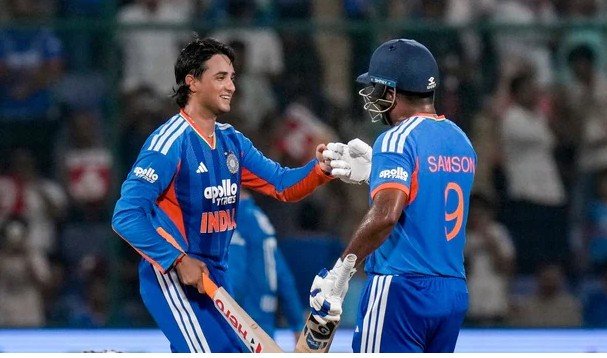
India vs Afghanistan 3rd T20 Cricket Highlights 2026
The India vs Afghanistan 3rd T20 Cricket Highlights 2026 delivered a spectacular conclusion to the three-match series as India defeated Afghanistan by 127 runs at the Arun Jaitley Stadium in New Delhi on September 17, 2026. India posted a commanding 221/7 in 20 overs before Afghanistan were bowled out for just 94 in 14.1 overs, completing a comprehensive 3-0 series sweep.
The headline performance belonged to Abhishek Sharma, whose extraordinary 108 off 34 balls included nine fours and 11 sixes. He reached his century from only 30 deliveries, setting a new record for the fastest T20I century by an Indian batter. Sanju Samson also played an important supporting role with a fluent 50 from 35 balls, while India’s bowling attack subsequently dismantled the Afghanistan batting order.
India vs Afghanistan 3rd T20 Cricket Highlights 2026
Quick Match/Event Summary
| Match Detail | Information |
|---|---|
| Match/Tournament Name | India vs Afghanistan 3rd T20I, 2026 |
| Teams | India vs Afghanistan |
| Date & Venue | September 17, 2026, Arun Jaitley Stadium, New Delhi |
| India Score | 221/7 in 20 overs |
| Afghanistan Score | 94 all out in 14.1 overs |
| Result | India won by 127 runs |
| Series Result | India won the three-match series 3-0 |
| Player of the Match | Abhishek Sharma |
| Player of the Series | Abhishek Sharma |
| Top Indian Batter | Abhishek Sharma – 108 off 34 |
| Other Major Contributor | Sanju Samson – 50 off 35 |
| Best Indian Bowlers | Nitish Kumar Reddy 3 wickets, Ravi Bishnoi 3 wickets |
| Venue | Arun Jaitley Stadium, Delhi |
The official scorecard records India’s 221/7 against Afghanistan’s 94 all out, with India winning by 127 runs.
Match Overview & Key Highlights
The third T20I was effectively a final opportunity for Afghanistan to prevent a clean sweep after India had already won the opening two matches by seven wickets each. India entered the contest with the series secured, while Afghanistan needed a victory to finish the tour with a positive result. All three matches of the series were played at the Arun Jaitley Stadium in Delhi.
Afghanistan captain Ibrahim Zadran won the toss and elected to field. India made one change to the playing XI, with Yash Thakur replacing Arshdeep Singh. Afghanistan retained the challenge of containing an Indian batting unit that had already produced aggressive performances throughout the series.
The decision to field initially appeared logical, but Afghanistan’s bowling attack struggled to contain India’s opening pair. Abhishek Sharma and Sanju Samson immediately attacked the bowling, transforming the powerplay into the defining phase of the match.
Abhishek was particularly destructive. His combination of clean hitting, strong footwork and fearless shot selection repeatedly put the bowlers under pressure. Samson provided the stability and aggression required at the other end, and together they established the foundation for India’s imposing total.
India eventually finished on 221/7, giving Afghanistan a demanding target of 222. The chase never developed into a serious contest as India’s bowlers consistently took wickets and restricted Afghanistan’s scoring opportunities.
First Innings Analysis: Abhishek Sharma Produces a Historic Knock
India’s first innings revolved almost entirely around Abhishek Sharma’s extraordinary batting display.
The left-handed opener attacked from the beginning and reached his half-century in only 16 balls. He continued accelerating instead of consolidating, eventually bringing up his century from just 30 deliveries. According to the ICC, the hundred was the fastest T20I century by an Indian batter and the third-fastest overall in men’s T20I cricket at the time.
Abhishek’s final score of 108 from 34 balls came at a remarkable strike rate of 317.65. His innings contained nine fours and 11 sixes, demonstrating how extensively he dominated the Afghanistan bowling attack.
His partnership with Sanju Samson was equally important to India’s overall total. Samson scored 50 from 35 balls, striking four sixes and two fours. Their opening stand provided India with an enormous advantage before the middle order even had to establish itself.
After Abhishek was dismissed by Rashid Khan, India continued scoring at a rapid rate. Shreyas Iyer contributed 29 from 20 balls, while Shivam Dube added 14 from 10. Ishan Kishan scored 10, while Axar Patel remained unbeaten on five.
Afghanistan’s bowling attack included experienced names such as Rashid Khan and Azmatullah Omarzai, but India’s aggressive approach ensured that the visitors were unable to control the scoring rate consistently.
The final score of 221/7 represented a formidable target and placed Afghanistan under immediate pressure before their chase even began.
Turning Point & Crucial Performances
The defining moment of the match came during Abhishek Sharma’s astonishing assault during the powerplay and middle overs.
His century from 30 balls completely changed the shape of India’s innings. Rather than simply building a competitive score, India were propelled into a position where 200-plus became a realistic possibility. The ICC confirmed that Abhishek’s century was India’s fastest in men’s T20I cricket.
His 11 sixes were also significant. The ICC noted that this was the second-highest number of sixes by an Indian men’s batter in a T20I innings.
Sanju Samson’s 50 was another major component of the innings. Coming after his contributions in the earlier matches, the half-century provided a strong second pillar alongside Abhishek. Samson was eventually dismissed by Azmatullah Omarzai, with Rashid Khan completing the catch.
For Afghanistan, Rashid Khan eventually removed Abhishek, ending one of the most destructive individual innings of the series. However, the damage had already been done. India’s total had moved beyond Afghanistan’s realistic comfort zone.
The second major turning point arrived during Afghanistan’s chase. India’s bowlers refused to allow the visitors to establish a meaningful partnership.
Nitish Kumar Reddy and Ravi Bishnoi claimed three wickets each, while Axar Patel took two. Jasprit Bumrah and Yash Thakur also picked up one wicket apiece.
Nitish’s performance was particularly notable because he contributed in both departments during the series. His ability to provide seam-bowling options alongside batting depth continued to strengthen India’s balance.
Ravi Bishnoi then played an important role in breaking Afghanistan’s resistance. His three wickets ensured that Afghanistan’s middle and lower order could not extend the chase.
The bowling performance demonstrated that India’s victory was not solely dependent on Abhishek’s batting. Once India had established a huge total, the bowlers executed their plans effectively and maintained pressure through regular wickets.
Second Innings & Tactical Breakdown
Afghanistan required 222 runs to win, meaning the required scoring rate was already above 11 runs per over from the start. Against India’s bowling attack, that equation demanded an exceptional opening partnership.
Instead, Afghanistan lost wickets regularly and never developed the momentum necessary for a successful chase.
The visitors were eventually dismissed for 94 in 14.1 overs, leaving India with a victory margin of 127 runs.
India’s tactical approach was straightforward but effective: create pressure through attacking fields, rotate their bowlers intelligently and prevent Afghanistan’s dangerous batters from settling.
The return of Jasprit Bumrah added another layer to India’s attack. Bumrah’s experience in controlling the middle and death overs meant Afghanistan had very little room to attack safely.
The spin combination of Ravi Bishnoi and Axar Patel was equally significant. Once Afghanistan fell behind the required rate, attacking the spinners became increasingly difficult because every unsuccessful shot increased the pressure.
Nitish Kumar Reddy provided the additional seam option and finished with three wickets. His contribution showed the value of India’s all-round depth in the shortest format.
By the 15th over, the contest had effectively been decided, with Afghanistan all out for 94.
Key Statistics & Milestone Records
- India: 221/7 in 20 overs.
- Afghanistan: 94 all out in 14.1 overs.
- India’s winning margin: 127 runs.
- Abhishek Sharma: 108 off 34 balls.
- Abhishek’s strike rate: 317.65.
- Abhishek’s boundaries: 9 fours and 11 sixes.
- Fastest Indian T20I century: Abhishek Sharma, 30 balls.
- Sanju Samson: 50 off 35 balls.
- Shreyas Iyer: 29 off 20 balls.
- Nitish Kumar Reddy: 3 wickets.
- Ravi Bishnoi: 3 wickets.
- Axar Patel: 2 wickets.
- Jasprit Bumrah: 1 wicket.
- Yash Thakur: 1 wicket.
- Series result: India won 3-0.
- Player of the Match: Abhishek Sharma.
- Player of the Series: Abhishek Sharma.
The performance also strengthened Abhishek’s statistical standing in India’s T20I history. His record-breaking century followed scores of 82 and 39 in the first two matches, underlining his consistency across the series.
Post-Match Impact & What’s Next
The India vs Afghanistan 3rd T20 Cricket Highlights 2026 therefore concluded with India completing a 3-0 series sweep. India won the first two matches by seven wickets before producing their largest victory of the series in the final game.
For India, the series provided valuable performances from Abhishek Sharma, Sanju Samson, Nitish Kumar Reddy, Ravi Bishnoi and the returning Jasprit Bumrah. Abhishek’s record-breaking century was the defining individual achievement of the series.
India’s next assignment is a one-off T20I against Japan, while Afghanistan are scheduled to continue their campaign in Japan at the Asian Games, according to the post-match reporting.
The third T20I will be remembered primarily for Abhishek Sharma’s breathtaking 108, but India’s 127-run victory also demonstrated the depth of their batting and bowling resources. The 3-0 result gave India a comprehensive finish to the series and provided plenty of memorable moments for cricket fans.